
Why Sport Is Becoming a Tool of 21st-Century Diplomacy
Why Sport Is Becoming a Tool of 21st-Century Diplomacy
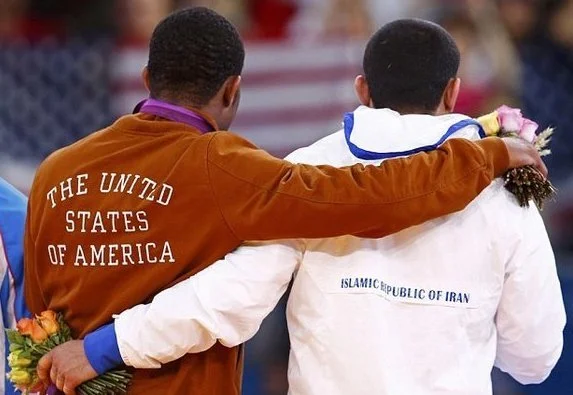
Sport is no longer just a global pastime. It is becoming one of the most strategic diplomatic tools of the 21st century.
In a period marked by geopolitical fragmentation, economic competition, and shifting spheres of influence, nations are rediscovering a simple truth:
sport reaches audiences and builds relationships in ways traditional diplomacy cannot.
Today, sport sits at the intersection of politics, economics, culture, technology, and soft power - making it a uniquely effective vehicle for shaping global engagement.
1. A Platform of Universal Participation
Few global systems can convene nearly every nation on earth.
Sport can.
Across FIFA, the IOC, World Athletics, FIBA, and dozens of other governing bodies, almost 200 nations participate within the same frameworks, under the same rules, and with the same aspirations.
In a time when geopolitical alliances are tightening and diplomatic channels are shrinking, sport remains one of the last shared global languages.
It provides a neutral arena for:
dialogue without formal negotiations
symbolic signals between governments
participation in global culture, even among politically isolated states
Where political structures fail, sport often succeeds.
2. Nations Are Using Sport to Project Influence
Governments are deploying sport as a strategic asset - not for trophies, but for influence.
Saudi Arabia uses sport to diversify its economy and strengthen its regional leadership.
China frames sport as a demonstration of national capability and technological advancement.
Qatar leverages mega-events to amplify its diplomatic footprint far beyond its geographic size.
The United States and Europe increasingly see global sports governance as a domain of strategic competition.
Sport becomes a channel to project values, forge alliances, and build international presence.
3. Sport as a Development and Peacebuilding Tool
Beyond geopolitics, governments and NGOs are using sport to address:
youth development
community cohesion
refugee integration
post-conflict rebuilding
public health and education
In fragile contexts, sport often succeeds where traditional infrastructure cannot.
It brings communities together quickly, visibly, and with minimal political friction.
Several UN agencies now recognize sport as a critical lever for achieving development objectives - particularly in regions with large youth populations.
4. A New Competitive Arena: Global Sports Governance
As the relevance of sport rises, so does the political importance of global governing bodies.
Seats within these institutions - from the IOC to international federations - increasingly shape:
international event hosting rights
funding distribution
regulatory standards
athlete movement
commercial rights
global rulemaking
This creates a subtle but important shift:
influence in sport is becoming influence in global governance.
Nations are strengthening their presence inside these systems, not just to promote athletes, but to shape international norms and future decision-making.
5. Technology Is Expanding the Diplomatic Reach of Sport
Sport’s influence is amplified by digital platforms:
global livestreaming
real-time global fanbases
social movements elevated by athletes
AI-driven content that travels across borders instantly
Sport is no longer bound by geography.
It is a global communications network - one that governments increasingly recognize as essential to national identity and international messaging.
6. The Next Decade: Sport as Strategy
The role of sport in diplomacy will only grow.
Expect to see:
more nations bidding for major events
greater competition for influence in federations
increased use of sport in peacebuilding and humanitarian work
new alliances formed through sports partnerships
sport becoming part of foreign policy strategies
cross-sector coalitions around youth development, health, and global cooperation
Sport is emerging as a governance tool, a diplomatic asset, and a development accelerator - not a recreational activity.
Why This Matters
As the world becomes more divided, the institutions capable of bringing nations together become more valuable.
Sport is one of them.
Not because it solves geopolitical tensions - but because it creates the environment where solutions become possible.
That is why sport will be one of the defining diplomatic tools of the 21st century.
© 2025 World Sports Program
A publication of the World Sports Program.
All rights reserved.
What If We Built the Olympic Movement From Scratch Today?
What If We Built the Olympic Movement From Scratch Today?
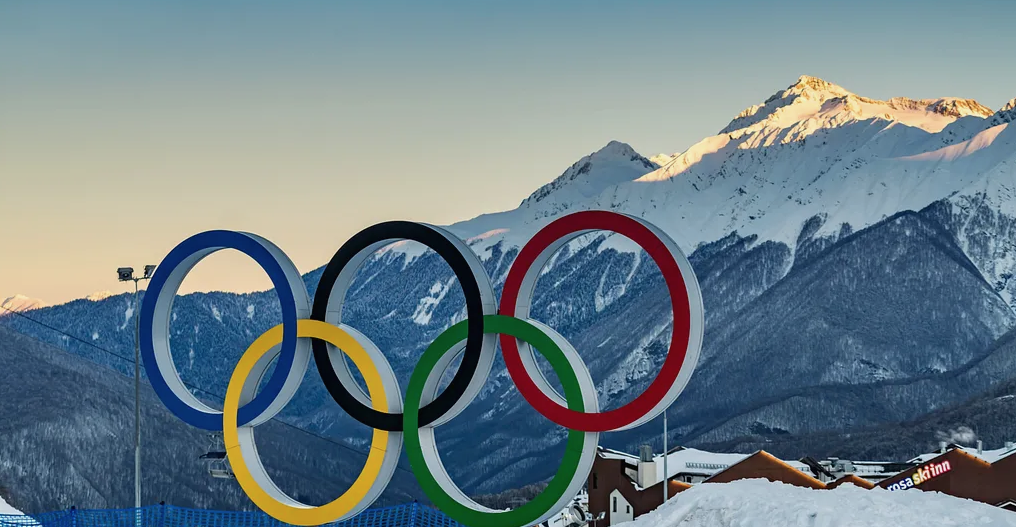
The Olympic Movement stands as one of the most enduring global institutions of the modern era. Yet the world in which it was designed bears little resemblance to the world in which it now operates. The structures, incentives, and governance philosophies that shaped the Olympic model a century ago were built for an environment defined by limited commercialization, slower geopolitical change, and a narrower global media ecosystem. Today the landscape is fundamentally different.
This raises an important question:
If the world were to create a global sporting movement today - from the ground up - what would it look like?
It is a question worth considering not as a critique of the current system, but as a way to understand the scale of transformation facing global sport and the type of governance architecture the next generation may require.
A modern Olympic Movement would begin with a different set of foundational assumptions. Global participation is no longer constrained by geography or limited communications networks. Talent pathways are international, media distribution is instantaneous, and athlete influence extends far beyond competition results. The contemporary world is characterized by complex interdependence, heightened geopolitical sensitivities, rapidly evolving technologies, and rising expectations for transparency and accountability in global institutions. Any new system would need to be built with these dynamics at its core rather than as afterthoughts.
A new Olympic framework would also likely place stronger emphasis on access and equity. When the modern Games were revived in 1896, sport was not widely viewed as a public good or a development tool. Today, however, sport is recognized for its role in education, health, youth outcomes, and community cohesion. A new movement might focus more explicitly on equal opportunity, sustainable development, and the reduction of global disparities in participation. This could lead to more coordinated funding mechanisms, stronger continental development pathways, and institutional commitments to supporting regions with limited sporting infrastructure.
Governance, too, would require reimagining. A modern architecture would almost certainly prioritize clearer decision-making processes, greater independence in ethics and compliance systems, more robust athlete representation, and stronger public accountability mechanisms. The expectations placed on international organizations today - from environmental responsibility to financial transparency - are significantly higher than in the past. A new model would need governance that reflects the standards applied to global institutions across other sectors, from health to finance.
The relationship between the Olympic Movement and host cities would also look different. The model of single-city bidding, large-scale capital investment, and short-term venue construction would likely be reconsidered. A contemporary Olympic system might emphasize regional co-hosting, long-term infrastructure planning, and sustainability requirements aligned with climate and development goals. The experience of recent decades - marked by escalating costs and uneven post-Games legacies - suggests that a new approach would prioritize flexibility, resource efficiency, and long-term community benefit.
Technological change offers another dimension. If the Olympic system were designed today, it would incorporate digital platforms, athlete data protections, new forms of global broadcasting, and opportunities for broader participation and engagement. Virtual and hybrid competition formats, better safeguarding mechanisms, and increased transparency in judging and officiating would likely form part of a modern foundation.
Finally, the geopolitical role of sport would require explicit consideration. The Games today operate at the intersection of diplomacy, national identity, and soft power. A newly designed Olympic Movement might include clearer protocols for political disputes, stronger protections for athlete expression, and frameworks that help maintain neutrality while acknowledging the realities of a complex international environment.
Imagining the Olympic Movement built from scratch is not an exercise in idealism. It is a way of understanding how global sport must evolve if it is to remain relevant, trusted, and capable of fulfilling its unique role in international society. The objective would not be to recreate the past, but to build a system capable of navigating the next century of global change.
The Olympics endure because they represent more than competition. They symbolize cooperation, aspiration, and shared human possibility. Ensuring that the system supporting them is equipped for the future is essential. Reimagining the movement from first principles may offer the perspective needed to guide that evolution.
© 2025 World Sports Program
A publication of the World Sports Program.
All rights reserved.
Private Equity Is Reshaping Global Sport - Quietly, Rapidly, and Permanently
Private Equity Is Reshaping Global Sport - Quietly, Rapidly, and Permanently
Global sport is experiencing one of the most significant structural shifts in its modern history. Over the past decade - and with accelerating speed in the past five years - private equity has moved from the margins of global sport to its center, reshaping decision-making, competition structures, and the financial foundations of leagues and federations. What was once a largely public, nonprofit, or community-based ecosystem is increasingly influenced by institutional capital and investment logic.
This development is not occurring in isolation. It reflects broader macroeconomic forces: the search for new asset classes in a low-yield environment, the growth of sovereign wealth funds, and the rising global appetite for sports content driven by digital media. Yet the scale and speed of private investment in sport is unprecedented. Football clubs, basketball leagues, mixed martial arts organizations, data companies, sponsorship rights holders, and even international federations have become targets of structured investment vehicles seeking long-term returns.
The arrival of private equity has generated clear benefits. Many sport organizations have historically struggled with financial volatility, limited modernization capacity, and governance structures that made strategic investment difficult. Private capital has introduced new management practices, improved commercial operations, accelerated technological adoption, and brought greater global reach to competitions. For leagues in emerging markets, this influx of capital has provided access to infrastructure investment, media distribution networks, and organizational expertise that would otherwise have taken decades to develop.
However, the long-term implications of this shift are not yet fully understood, and the risks are becoming more visible. The logic of private investment - centered on return horizons, asset value appreciation, and commercial optimization - does not always align with sport’s broader societal role. Institutions that historically functioned as community anchors and public goods are increasingly intertwined with financial models designed for shorter cycles and more extractive incentives.
One area of concern is competitive balance. In several global leagues, private investment has concentrated resources among a limited group of clubs or organizations, widening disparities and making it more difficult for traditional or community-rooted teams to compete on equal terms. This trend risks deepening inequalities across youth pathways, talent development systems, and regional participation levels.
Another emerging issue is governance influence. As investment groups gain ownership stakes, the governance of leagues and federations becomes more complex. Decisions that once rested with member associations, community stakeholders, or national bodies are increasingly shaped by financial partners whose interests may not reflect long-term development goals. The influence of sovereign wealth funds has added a geopolitical dimension, raising questions about strategic intent, state influence, and the political uses of sport as a tool of soft power.
There are also implications for athletes. The professionalization that accompanies private investment often improves high-performance environments, but it can also create new pressures related to workload, commercialization, and the commodification of athlete identity. The long-term welfare of athletes - both during and after their careers - must remain central as governance structures adjust to the presence of new financial actors.
The technological landscape adds another layer. Many private equity-backed entities are investing heavily in data systems, AI analytics, performance tracking, and digital engagement platforms. These innovations have the potential to expand participation and global accessibility, yet they also raise questions about data ownership, privacy, and equitable access to advanced technologies. As with other sectors, the benefits of innovation may accrue disproportionately to organizations with greater capital exposure.
The central challenge for global sport is not whether private equity should be involved - it is already embedded in the system and will remain so. The question is how the global sports community can develop governance frameworks, transparency mechanisms, and shared standards that ensure investment contributes to the long-term health of sport rather than compromising its foundational role.
A balanced approach is needed: one that recognizes the developmental possibilities of capital investment while strengthening safeguards that protect access, competitive integrity, athlete welfare, and the public value of sport. The decisions made in the coming decade will determine whether private equity becomes a force for modernization and resilience - or a driver of deeper fragmentation and inequality.
As this transformation accelerates, understanding the incentives, structures, and cross-border dynamics of private investment will be essential. The future of global sport will be shaped not only by federations and leagues, but by the financial actors who now play an increasingly decisive role in its direction.
© 2025 World Sports Program
A publication of the World Sports Program.
All rights reserved.

How Technology Is Quietly Reshaping Global Sport
How Technology Is Quietly Reshaping Global Sport
For most of the past century, the structures of global sport changed slowly. Rules evolved, media expanded, and international competitions grew in scale, but the underlying systems of talent identification, governance, training, and participation remained largely intact. That era is now ending.
Digital technology is not simply enhancing sport; it is restructuring how sport functions at every level. From grassroots participation to elite competition, from governance to global media rights, technology is becoming a foundational layer of the modern sports ecosystem.
At the athlete level, data and performance tracking have become standard. Wearables, computer vision, and biomechanical analytics now shape how athletes train, recover, and extend careers. What was once the domain of Olympic programs and professional clubs is increasingly accessible to youth academies, schools, and community programs. This expansion raises new questions about equity, data ownership, and long-term athlete development in a digitized environment.
Artificial intelligence is also altering how talent is identified and evaluated. Video analysis platforms, automated scouting tools, and predictive performance models are changing the geography of opportunity. Athletes in previously under-scouted regions can now be discovered through digital platforms rather than traditional networks. While this opens new pathways, it also introduces risks: algorithmic bias, unequal access to technology, and the concentration of talent data in private systems outside public oversight.
At the organizational level, technology is transforming sport governance. Federations increasingly rely on digital registration systems, online compliance platforms, and centralized databases to manage participants, competitions, and eligibility. These systems improve transparency and efficiency, but they also shift power toward those who control infrastructure and data architecture. Governance capacity is no longer defined only by rules and institutions, but by digital capability.
Media and fan engagement are undergoing equally significant change. Streaming platforms, social media, and direct-to-consumer distribution models have weakened the dominance of traditional broadcasters and opened global markets to even the smallest leagues. At the same time, this has intensified competition for attention, elevated the role of platform companies, and blurred the line between sport, entertainment, and technology firms.
These transformations raise critical strategic questions for the next decade. Who owns the data generated by athletes and fans? How should international federations regulate technologies that shape performance, access, and competition? What standards should govern AI use in scouting and training? And how can digital transformation be aligned with inclusion rather than widening existing inequalities?
Technology is often framed as a tool for optimization. In global sport, it is increasingly a force of structural change. The decisions made now—by governments, federations, investors, and educators—will determine whether this transformation strengthens access, integrity, and participation, or concentrates control in fewer hands.
The future of sport will be shaped not only on fields of play, but in code, platforms, and data systems that increasingly define how sport is organized, governed, and experienced worldwide.